
Cyprus schools page
Network Analysis

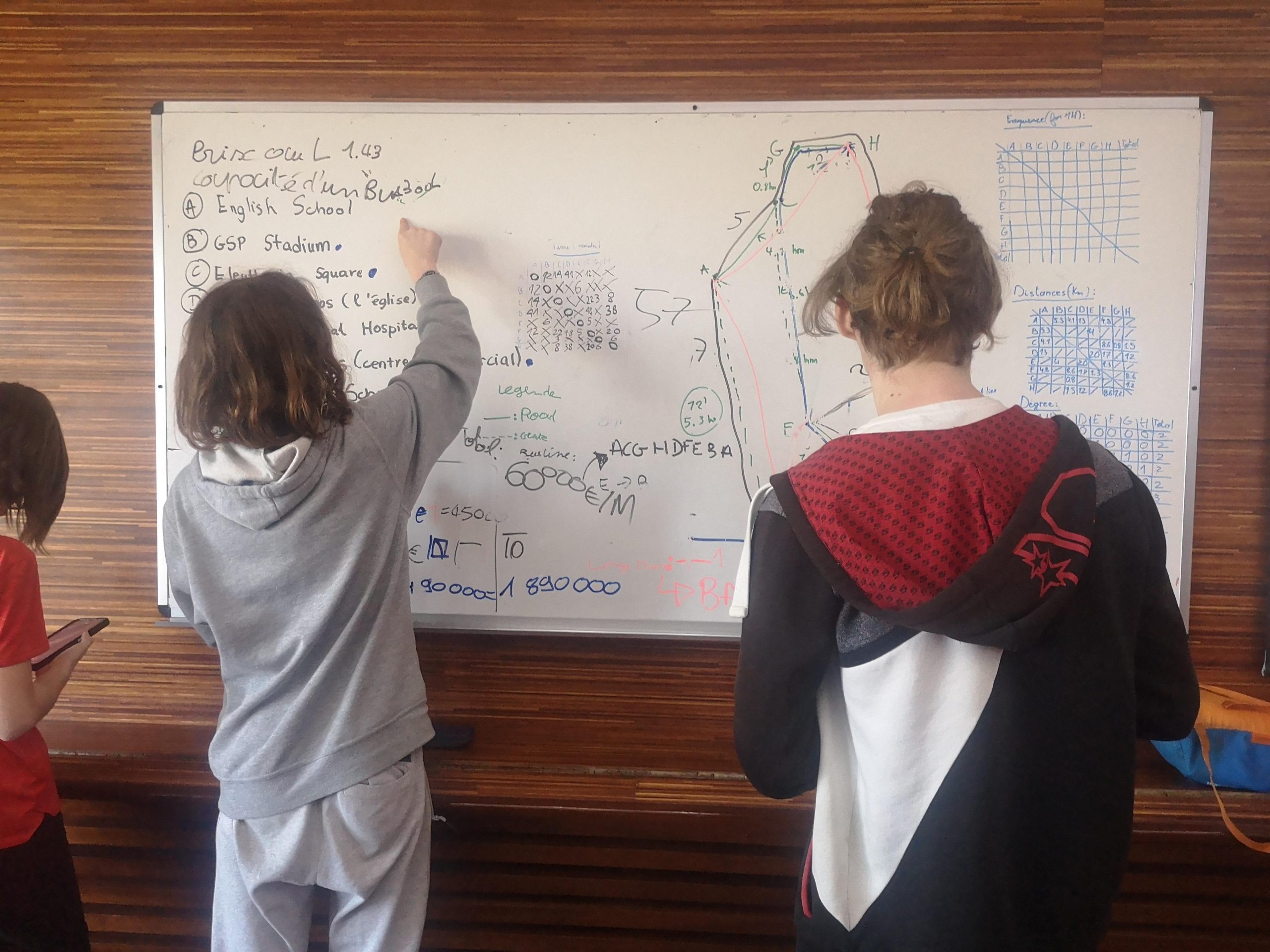

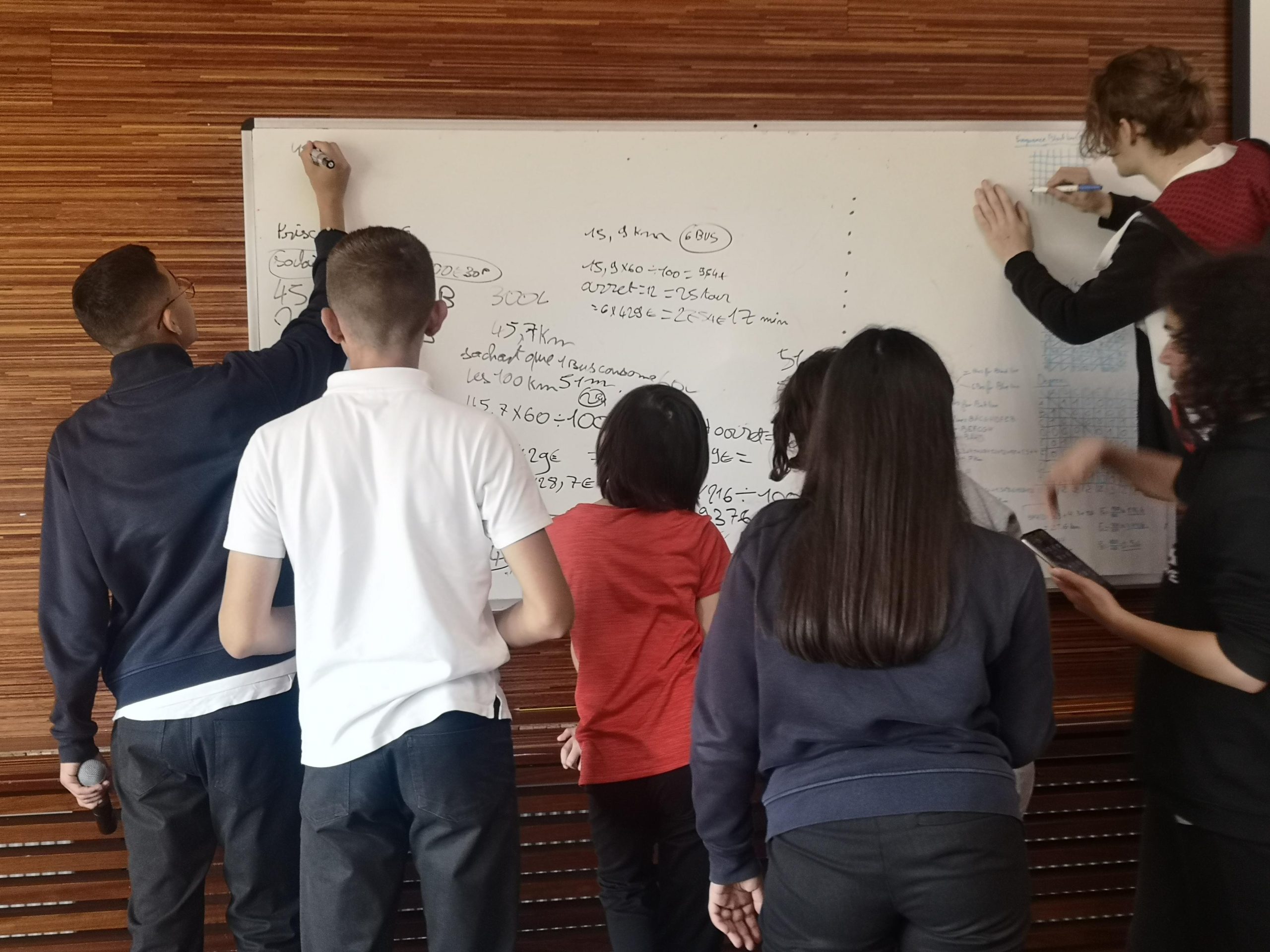

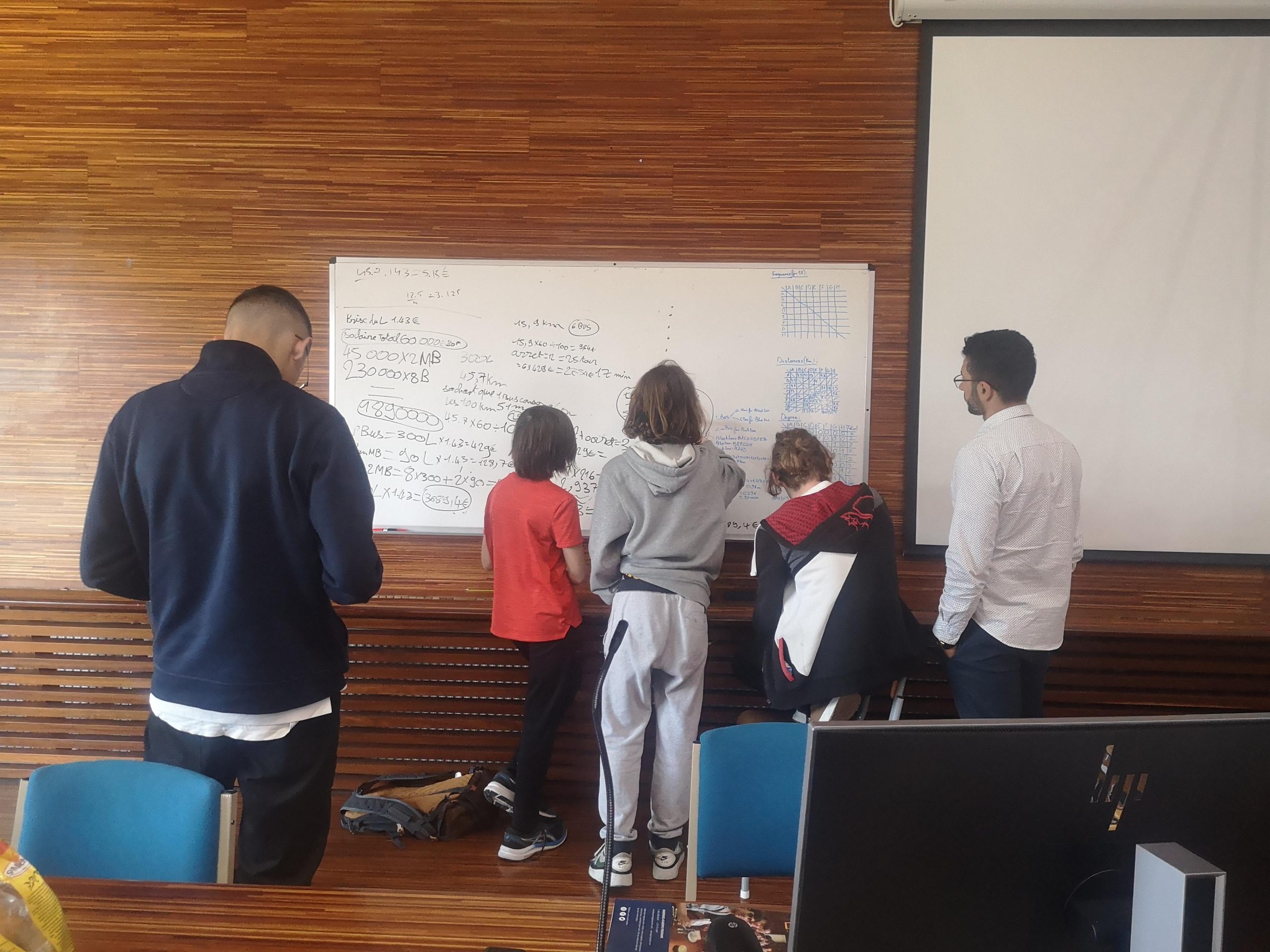
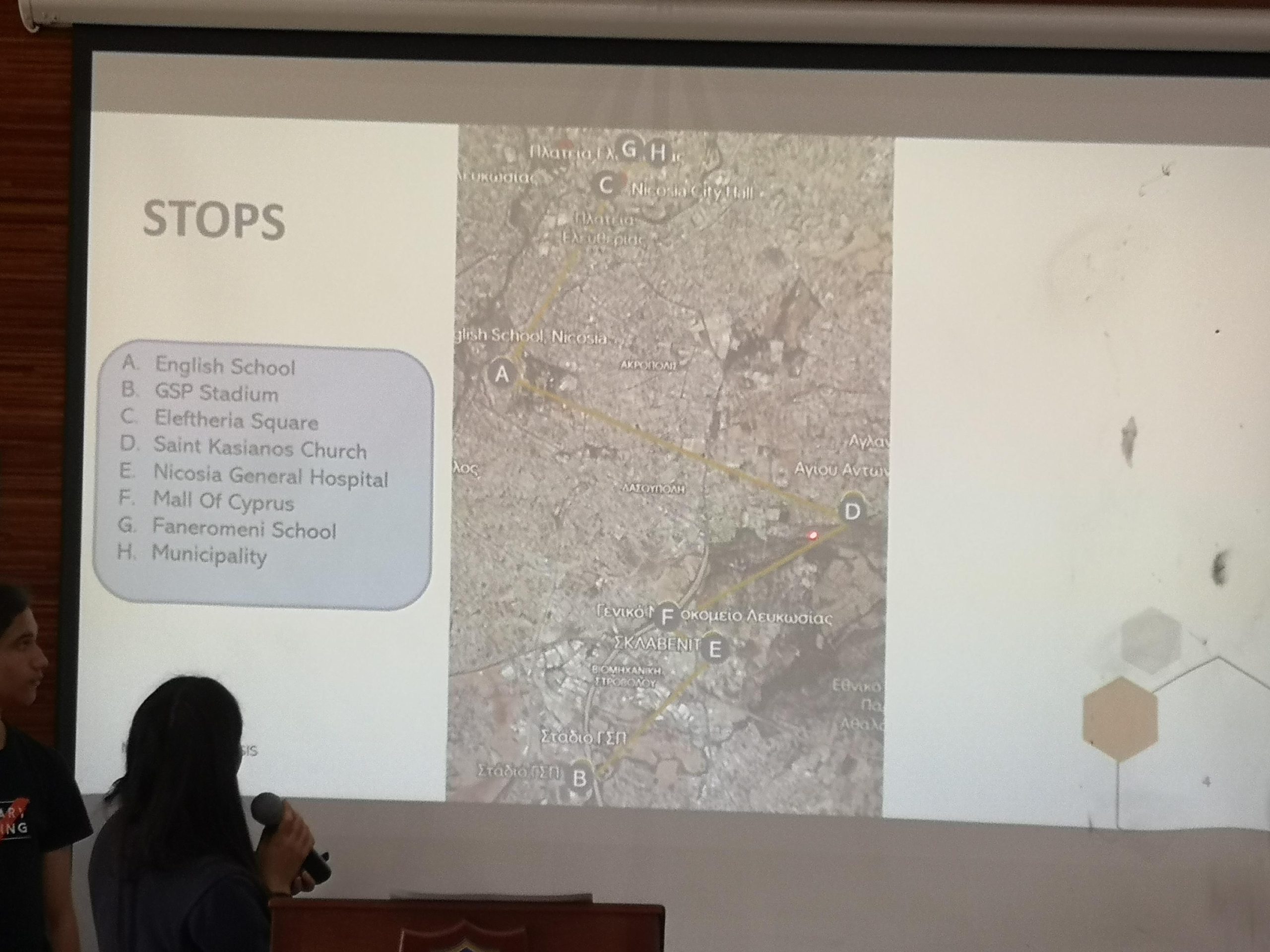
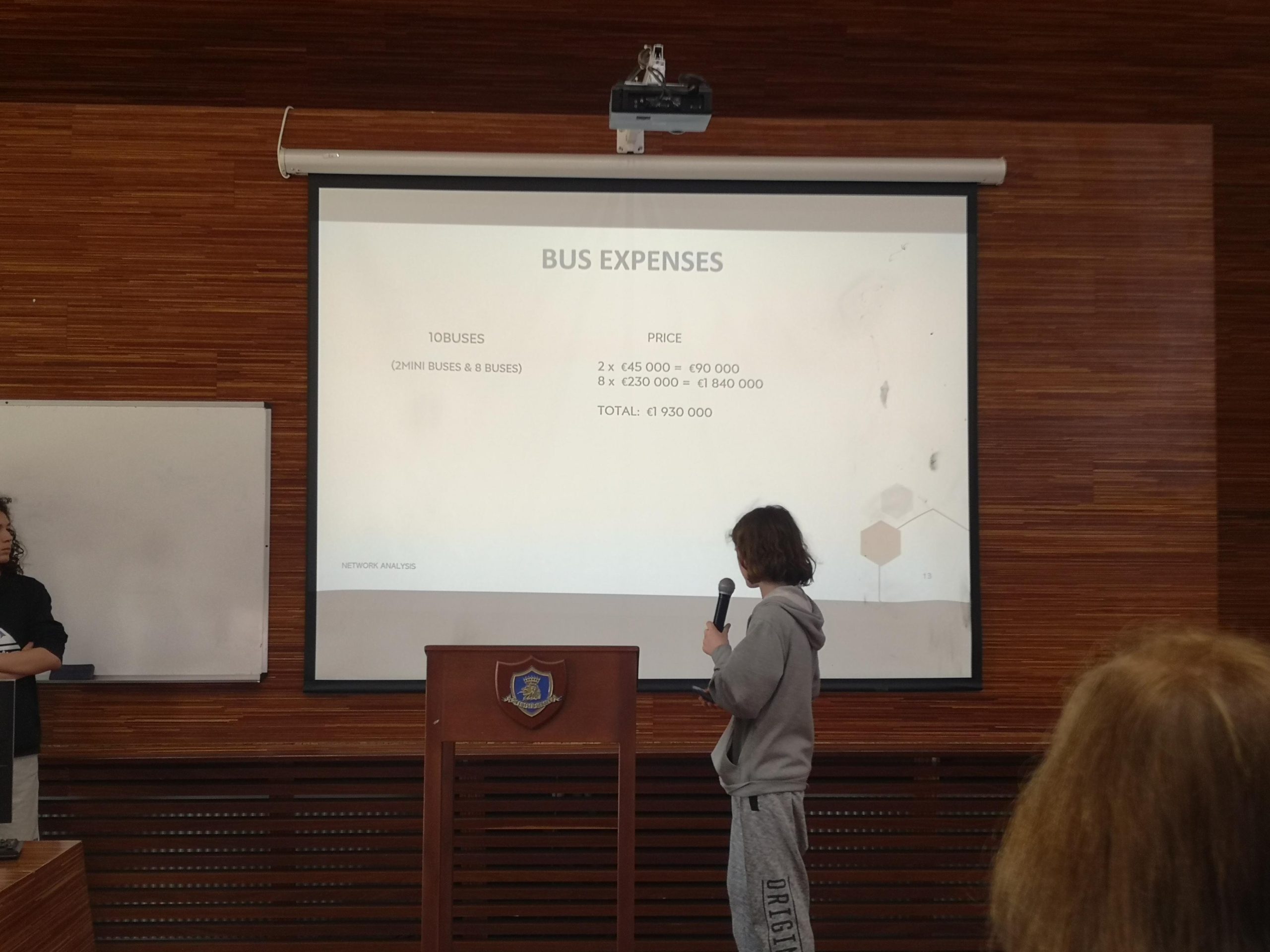


The Problem at Hand: Network Analysis The project's core challenge revolved around network analysis, with a focus on various transportation services. The learning scenario was that students were hired by the English School, Nicosia as a team of consultants, to create and analyze a bus network. Their aim was to connect the school with seven other locations in the city of Nicosia and create an efficient transportation network for students. They were given a budget of 5 million euros to buy buses, build stations, and to hire bus drivers to buy the school’s buses. They had to buy 8 buses and 2 minibuses. As consultants, they had to offer expert recommendations, drawing upon their expertise in mathematics, specifically Algebra, Graph Theory, and Computer Applications.
In the ever-evolving landscape of education, fostering interdisciplinary skills and encouraging students to apply their theoretical knowledge to real-world challenges is essential. The ImTech4Ed project, part of the Erasmus+ initiative, exemplified this approach during an Erasmus+ week at the English School in Nicosia on 31st April- 4th May in Nicosia, Cyprus. This initiative brought together five students from the English School and five students from the College Jules Ferry in Chambery, France, under the banner of the Gifted and Talented program in Maths. The project aimed to bridge the gap between academic theory and practical problem-solving in the realm of network analysis.
The Problem at Hand: Network Analysis The project's core challenge revolved around network analysis, with a focus on various transportation services. The learning scenario was that students were hired by the English School, Nicosia as a team of consultants, to create and analyze a bus network. Their aim was to connect the school with seven other locations in the city of Nicosia and create an efficient transportation network for students. They were given a budget of 5 million euros to buy buses, build stations, and to hire bus drivers to buy the school’s buses. They had to buy 8 buses and 2 minibuses. As consultants, they had to offer expert recommendations, drawing upon their expertise in mathematics, specifically Algebra, Graph Theory, and Computer Applications.
A Multifaceted Approach: Applying Math to Real-World Scenarios The ‘ImTech4Ed’ project seamlessly integrated various mathematical disciplines into its curriculum, providing students with an unparalleled learning experience.
1. Discrete Math - Introduction to Graphs: The project's primary focus was introducing students to the intriguing world of Graph Theory. Participants delved into concepts like vertex-edge graphs, weighted graphs, shortest paths, and spanning trees. They also had the opportunity to work with basic algorithms to find minimal spanning trees. What's more, the project allowed flexibility by enabling students to draw graphs by hand or use software like Geometer’s Sketchpad. This not only fostered creativity but also encouraged students to think beyond textbook mathematics.
2. Algebra II - The Power of Matrices: The ImTech4Ed project proved that Algebra isn't just about abstract equations but has real-world applications. It provided students with a practical understanding of matrices and their role in solving complex problems. Through the project, students explored the utility of the Adjacency Matrix and other power matrices in finding the shortest paths. They also gained valuable hands-on experience by using tools like Excel and TI applications for matrix operations. This combination of theory and application helped bridge the gap between classroom learning and its real-world relevance.
Project Phases: The project was divided into two main phases to facilitate learning:
Part 1: The Network In this stage, students were presented with information about the problem, routes, and objectives. The teacher introduced Graph Theory and the concept of Eulerian paths and circuits. Groups were then tasked with creating graphs of their designated transportation routes, breathing life into abstract mathematical concepts.
Part 2: Guiding Students Here, the teacher provided further guidance on Graph Theory through valuable resource links. Students were divided into groups, each assigned a particular perspective on the transportation problem. Collaboration was encouraged among groups. Each group embarked on the journey to develop recommendations, creating charts, matrices, adjacency matrices, minimum spanning trees, and weighted graphs.
Crossing Language Barriers: Collaboration in English One of the most remarkable achievements of the ImTech4Ed project was the successful collaboration among students from different native language backgrounds. Despite the language barrier, the students managed to effectively communicate and collaborate in English. This accomplishment not only demonstrates the power of interdisciplinary education but also highlights the importance of language as a tool for breaking down barriers and fostering global collaboration.
Aural Presentations: Sharing Ideas with the World The project's culmination involved students presenting their findings to an audience that included school management, teachers from both schools, and parents. These students, from different language backgrounds, confidently delivered their presentations orally, showcasing their in-depth understanding of the subject matter. This ability to present their ideas aurally not only reflects their mastery of the project material but also their newfound skills in effective communication.
Conclusion: The ImTech4Ed project's success lies in its ability to blend mathematics with practical problem-solving. By offering students the chance to tackle a real-world problem, it transcended the boundaries of traditional education. The project epitomizes the future of education, where students learn not just for the sake of passing exams but to become adept problem solvers, ready to face the complexities of the modern world.
In the age of digital transformation and fast-paced technological advancements, initiatives like ImTech4Ed exemplify the direction education should take. The project's integration of mathematics into real-world scenarios empowers students with the tools they need to tackle the challenges of tomorrow. By breaking down the barriers between theory and application and by fostering global collaboration, ImTech4Ed is shaping the innovators and critical thinkers of the future.